
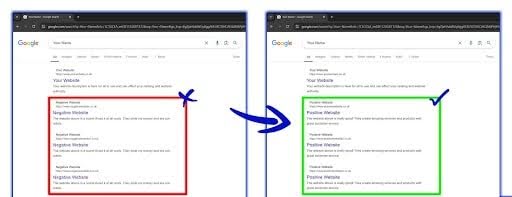
At White Lily Reputation, we help individuals and businesses pursue removals where there’s a legitimate basis, and build strong positive content strategies where removal isn’t possible. Below is a quick guide to what makes a removal request strong, and why requests often fail.
1) No valid ground for removal (it’s “unfair” but not unlawful)
A lot of content is damaging but still lawful, such as harsh opinions, critical commentary, or speculation that does not breach a policy. When there is no clear rule breach, “I don’t like it” is not a removal basis. If removal is not realistic, suppression is often faster: publish credible positive content and improve its search visibility so the negative result is pushed down.
2) The request targets the wrong party
Requests fail when they go to an entity that does not control the content. Publishers and platforms can remove or edit posts. Search engines can usually only de-index, and only for specific categories. Hosts tend to act only in limited situations involving clear legal or policy breaches.
3) The request is too vague
“Remove this article about me” forces the reviewer to find and interpret the disputed material, which slows everything down. Make the request easy to process by including direct URLs, screenshots in case the content changes, the exact quoted passages you are disputing, and a short explanation of what is wrong and why.
4) Not providing proof (or providing the wrong proof)
Unverified statements like “This is a lie” rarely move a case forward. Reviewers need evidence that can be checked, such as contracts and invoices, message threads that show what happened, business registration details for misrepresentation, relevant court or police references, or proof of ownership for copyright issues.
5) Using the wrong legal mechanism (especially around copyright/DMCA)
DMCA complaints only apply to copyright infringement, such as copied text, images, branding assets, or proprietary materials. If the problem is defamation, privacy, harassment, or impersonation, a DMCA route will likely be rejected and repeated misuse can harm credibility. Choose the mechanism that matches the issue.
6) Not proving identity (or authority to act)
Sensitive removals often require proof you are the subject, rights holder, or an authorised representative. Strengthen the request with a signed authorisation letter when appropriate, proof of representation, and clear contact details with a professional signature.
7) Confusing removal, de-indexing, and suppression
Many requests fail because they aim for the wrong outcome. Removal takes content down at the source. De-indexing leaves it online but reduces its visibility in search. Suppression focuses on ranking positive, accurate content above negative results over time.
If your request fails, it doesn’t mean you’re stuck
A rejection usually means the basis was not strong enough, the evidence was unclear, or a different route is needed. In practice, the best approach often combines targeted removal attempts (where there is a valid basis) with a positive content strategy that reduces visibility and rebuilds trust.
Need help writing (or escalating) a removal request?
If you are dealing with harmful reviews, articles, forum posts, impersonation accounts, or outdated or false claims, we can advise on the best route: removal, de-indexing, correction, or suppression through positive content.
White Lily Reputation specialises in negative content removal strategy and reputation repair through high-quality positive content that strengthens search results and brand perception.