
An old news article can keep ranking for your name for years, long after the story has moved on and long after it says anything useful about who you are now. News sites tend to be trusted by search engines, which is exactly why these articles are so persistent. The good news is that there’s usually more than one way to deal with them, and the right approach often isn’t the most obvious one. This isn’t legal advice, but it should help you understand the options before deciding on a route.
Start With What Kind of Article It Is
The best route depends heavily on the article itself. Is it accurate but simply old? Is it inaccurate, or misleading by leaving out important facts? Did the story have a later outcome that isn’t reflected, such as charges being dropped or an acquittal? Does it include private details that were never really in the public interest? Each of these points towards a different approach, so it’s worth being clear on the answer before contacting anyone.
The Practical Options
For many people, the most effective first step isn’t a legal one at all. It’s a well-judged request to the publisher.
Asking the publisher to update, anonymise, or unpublish. Many news organisations, particularly local and regional titles, will consider requests about older articles, especially where the subject was a private individual, the matter was minor, or a significant amount of time has passed. Some will remove the article entirely. Others will anonymise it by removing your name, which usually stops it appearing for searches of your name while keeping the story itself intact.
Asking for an update where the story moved on. If an article reports an arrest or charge but not the outcome, asking the publisher to add an update, or to publish a follow-up, can change how the article reads to anyone who finds it. Publishers are often more willing to do this than to remove content, because it improves accuracy rather than taking anything away.
Asking for the article to be removed from search results. Some publishers will leave an article on their site but mark it so that search engines stop showing it. The article still exists, but it no longer appears when someone searches your name, which for most people is the part that matters.
These requests work best when they’re polite, specific, and clearly explain why the article is no longer fair or relevant. Handled well, they can resolve the problem quickly and without cost or confrontation. This is a core part of our article removal work.
The Legal and Regulatory Routes
Where the practical route doesn’t work, or the article is inaccurate or unlawful, there are more formal options.
Defamation.
If an article contains false statements that have caused, or are likely to cause, serious harm to your reputation, there may be grounds for a defamation claim. Time limits are strict. In England and Wales, a claim generally has to be brought within one year of first publication, which means this route is often unavailable for older articles.
Data protection and delisting.
UK data protection law allows individuals to ask search engines to stop showing certain results for searches of their name, where the information is inaccurate, out of date, or no longer relevant, and where the public interest in it doesn’t outweigh your privacy. This doesn’t remove the article from the publisher’s site, but it can stop it appearing under your name. Requests made directly to publishers are harder, because journalism has specific protections under data protection law. We’ve explained how this works for convictions in old criminal records online.
Press regulator complaints.
Many UK publications are members of a press regulator and follow an editors’ code that covers accuracy and privacy. If an article breaches that code, a complaint can lead to a correction or other action. Regulators have their own time limits and processes, so it’s worth checking which one a publication belongs to before relying on this route.
For more on choosing between formal routes, see when to escalate — platform reports, legal letters, and regulatory complaints.
Why the Practical Route Often Comes First
Legal action can be expensive, slow, and uncertain, and it carries a risk that’s easy to overlook: drawing fresh attention to the very article you want forgotten. A publisher that receives a heavy-handed legal threat may be less willing to help, and in some cases the dispute itself becomes a new story. Starting with a reasonable, well-evidenced request keeps options open, and more formal steps can follow if needed.
When the Article Stays: Reducing Its Visibility
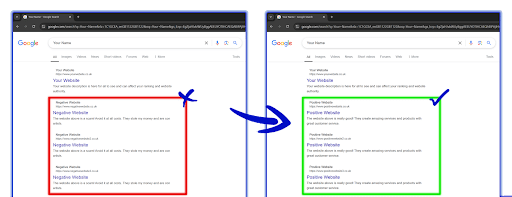
Sometimes an article can’t be removed, anonymised, or delisted. When that happens, the focus shifts to making sure fewer people see it, by building strong, positive content that ranks above it for searches of your name. Because news sites rank well, this takes time, but it’s a dependable approach and one that keeps working after the campaign ends. A deep dive will also show whether the article has been copied elsewhere, so nothing is left behind once the original has been dealt with.
If an old news article is still following you, contact us today and we’ll help you work out the most effective route for your situation.